{Insights}
by alchemain team
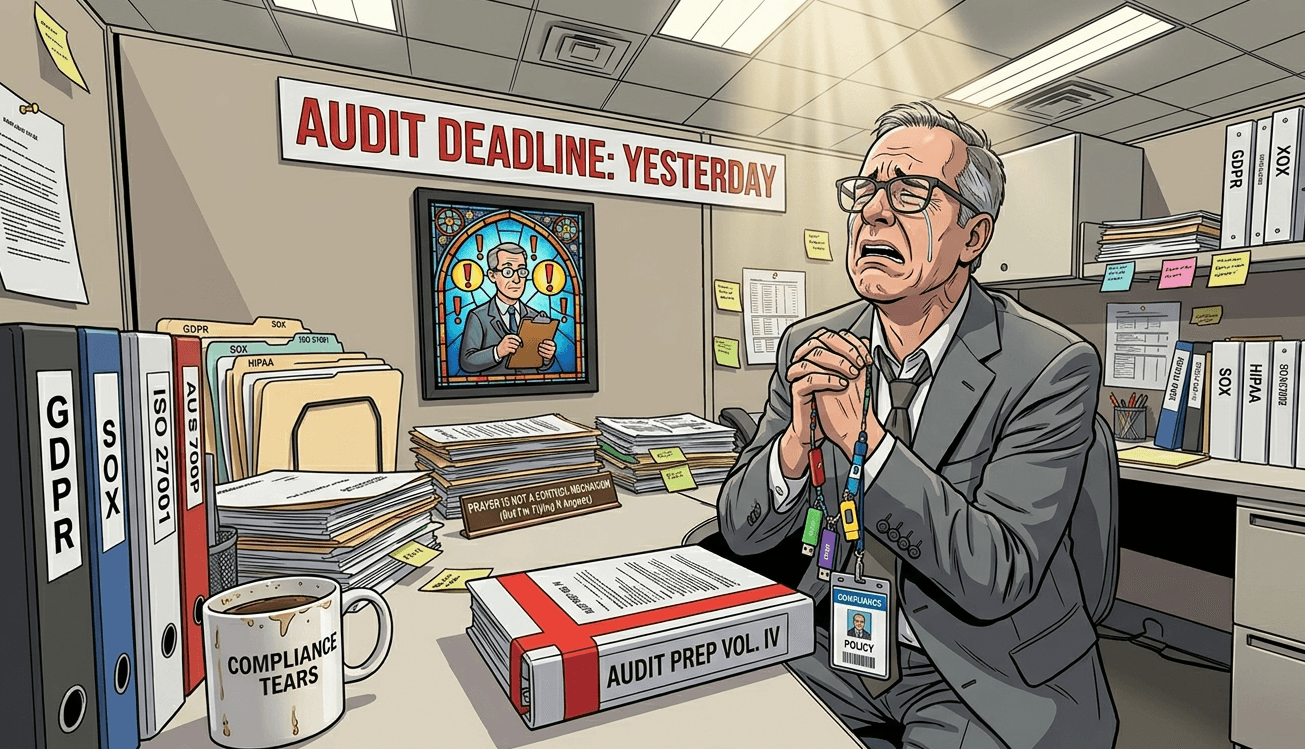

Compliance used to be something you prepared for. Today, the model of reviewing policies, documenting controls, and waiting around for an audit doesn’t reflect reality. Most modern compliance and governance mandates now expect organizations to demonstrate that their software is actively maintained, risks are addressed continuously, and third-party components are understood and controlled.
Frameworks like SOC 2, FedRAMP, HIPAA, and ISO 27001 may differ in scope and audience, but they converge on the same practical expectation: your codebase should be current, known risks should be remediated in a reasonable timeframe, and you should be able to explain what’s running in production without running a fever.
This is where dependency management quietly becomes a compliance problem. Modern applications are built on layers of third-party libraries that change constantly and independently of your release cycles. Vulnerabilities, deprecations, and license changes show up faster than most teams can safely integrate them, especially when upgrades break builds or ripple through transitive dependencies. As a result, updates are often deferred, not because teams are unaware of the risk, but because the cost of fixing things manually is too high.
When compliance depends on ad hoc upgrades and last-minute remediation, it becomes fragile and stressful to maintain. When dependency management is handled continuously and systematically, compliance becomes easier to sustain and easier to defend. The difference isn’t intent or effort, it’s whether the systems supporting compliance are designed to operate at the pace of modern software.
SOC 2: Continuous Controls Meet Real Engineering Work
SOC 2 is often treated as a milestone, especially for SaaS companies, but it’s designed to measure how systems are operated over time. Auditors have an expectation that risks are identified and addressed consistently and within reasonable timeframes.
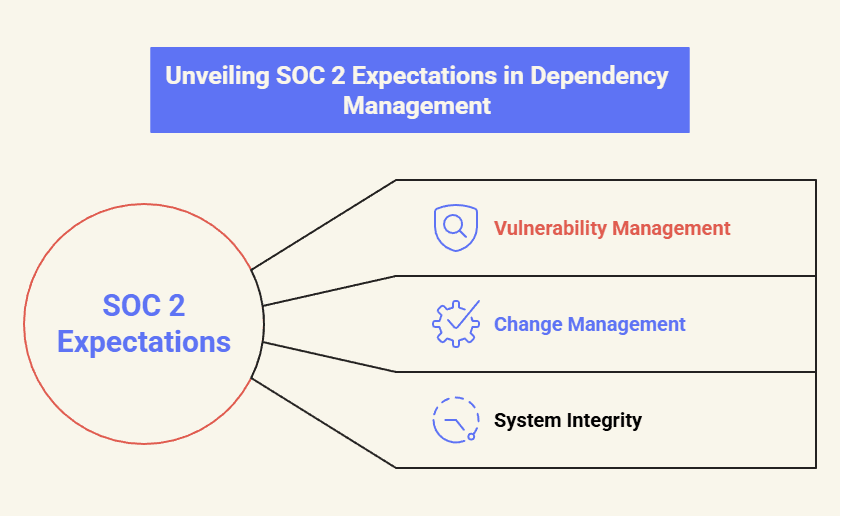
Several SOC 2 expectations routinely surface dependency-related issues:
Vulnerability management controls require that known security issues are identified, evaluated, and remediated within defined timeframes. When vulnerabilities exist in third-party libraries, remediation almost always means upgrading dependencies rather than applying one-off fixes.
Change management controls expect that changes to production systems are authorized, tested, and repeatable. Dependency upgrades count as production changes, even when they’re security-driven, and auditors will look for evidence that those changes don’t introduce instability.
System integrity expectations assume that software components are kept reasonably current and supported. Long-lived, outdated dependencies often trigger follow-up questions during audits, especially when fixes have been available for extended periods.
This is where teams can run into trouble. Vulnerabilities are identified quickly, but upgrading dependencies safely is rarely trivial. API changes, transitive dependencies, and failing builds turn remediation into a multi-step engineering effort. As a result, issues remain open longer than intended, and exceptions pile up.
From a SOC 2 perspective, you now have a visibility gap. Controls may exist on paper, but their effectiveness depends on how reliably remediation happens in practice. When dependency upgrades are manual and disruptive, compliance becomes episodic and audit-driven rather than continuous.
Organizations that have an easier time sustaining SOC 2 tend to treat dependency updates as routine maintenance instead of exceptional events. When upgrades are applied consistently, validated through testing, and tracked as part of normal development workflows, vulnerability remediation aligns more naturally with SOC 2’s expectation of ongoing control effectiveness rather than last-minute cleanup.
HIPAA: Security Depends on Software Maintenance
HIPAA is often thought of primarily as a privacy framework, but a significant portion of HIPAA compliance sits squarely in the Security Rule. Covered entities and their vendors are expected to ensure the confidentiality, integrity, and availability of systems that handle protected health information (PHI), which includes protecting those systems from known and reasonably anticipated threats.
In practice, this places clear expectations on software maintenance. Organizations are expected to address known vulnerabilities, limit exposure from outdated or unsupported components, and ensure that systems handling PHI are not running software with well-documented weaknesses. When those weaknesses originate in third-party libraries, remediation typically means upgrading dependencies rather than applying narrow fixes.
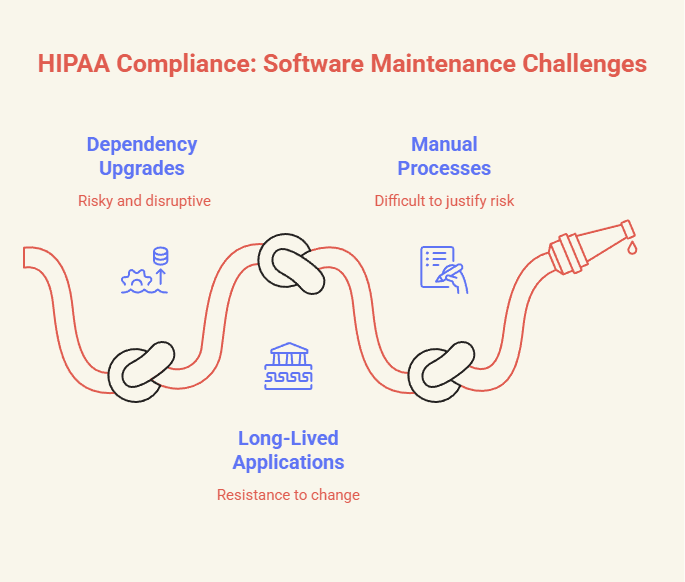
This is where HIPAA compliance often collides with engineering reality. Many healthcare systems rely on long-lived applications that teams are understandably cautious about changing. Dependency upgrades can feel risky, especially when APIs change or transitive dependencies introduce unexpected behavior. As a result, libraries remain outdated long after fixes are available, increasing exposure even when no immediate incident has occurred.
From a compliance perspective, this creates a difficult position. HIPAA does not prescribe exact remediation timelines, but it does expect organizations to demonstrate reasonable and ongoing risk management. When dependency upgrades are repeatedly deferred because they are disruptive or manual, it becomes harder to justify that known risks are being managed appropriately.
Organizations that handle HIPAA compliance more effectively tend to reduce the perceived risk of maintenance itself. When dependency upgrades are validated through testing and applied incrementally, keeping systems current becomes part of normal operations rather than a high-stakes event. That shift makes it easier to demonstrate continuous protection of PHI without relying on emergency fixes or prolonged risk acceptance.
FedRAMP: When Scale Turns Maintenance into Governance
FedRAMP makes explicit what many other frameworks imply: organizations are expected to understand their software supply chain and remediate known risk within defined timelines. Vulnerability severity levels are mapped to remediation SLAs, and auditors expect evidence that fixes are applied consistently across systems, not selectively or opportunistically.
In environments pursuing or maintaining FedRAMP authorization, dependency management quickly becomes a governance issue. FedRAMP systems often span many services and repositories, each with deep trees of third-party libraries that evolve independently. When a vulnerability is disclosed in a widely used dependency, remediation usually requires coordinated upgrades across multiple codebases rather than a single isolated fix.
This is where teams run into friction. Upgrading dependencies safely at this scale is difficult to do manually, especially when API changes or transitive dependencies introduce build failures. Engineers are forced to balance remediation timelines against system stability, and over time that tension leads to exceptions, compensating controls, or documented risk acceptance instead of actual fixes.
From a FedRAMP perspective, this creates an operational risk. Controls may exist, but their effectiveness depends on whether remediation can be executed reliably under real-world conditions. When dependency upgrades are slow, disruptive, or inconsistent, compliance becomes harder to sustain and harder to defend during assessments.
All that to say? Organizations that manage FedRAMP more effectively tend to reduce reliance on manual remediation, making dependency upgrades repeatable, validated, and part of normal engineering workflows.
ISO 27001: Governance Depends on Consistency
ISO 27001 is less prescriptive than other frameworks, but it places a strong emphasis on risk management, continuous improvement, and operational consistency. Organizations are expected to identify information security risks, apply controls proportionate to those risks, and demonstrate that those controls are operating effectively over time.
In practice, this often surfaces questions about software maintenance. Auditors want to understand how organizations manage known risks in their systems, including vulnerabilities introduced through third-party components. Outdated or unsupported dependencies frequently appear in risk registers, along with mitigation plans that rely on future upgrades or manual remediation.
The challenge is that when dependency updates are difficult or disruptive, those mitigation plans tend to linger. Risks remain “accepted” longer than intended, and governance becomes more about documentation than actual risk reduction. Over time, this erodes confidence that controls are operating as designed.
Repeatability is key for ISO 27001. When dependency management is handled in a consistent, low-friction way, risk treatment stops being an exception process and becomes part of normal operations. That consistency is what ISO 27001 ultimately rewards: not perfection, but demonstrable control over how security risks are identified, addressed, and reduced over time.
Compliance Works Better When the System Does the Work
Across SOC 2, HIPAA, FedRAMP, and ISO 27001, the expectations are consistent. Organizations are expected to maintain their software, address known risks in a reasonable timeframe, and understand the third-party components they rely on. Where teams struggle is not with intent, but with execution at the pace modern software requires. When dependency maintenance happens in bursts driven by audits or deadlines, compliance becomes reactive and difficult to sustain.
Teams that handle compliance more effectively treat dependency updates as ongoing operational work. Upgrades happen continuously, changes are validated through testing, and risk is reduced incrementally instead of accumulating in the background.
This is where Alchemain and 00felix fit. By automating dependency upgrades and repairing the first-party code they break, 00felix reduces dependency drift without adding manual work for engineers. The result is a more consistent compliance posture supported by how systems operate day to day, rather than by last-minute remediation.